

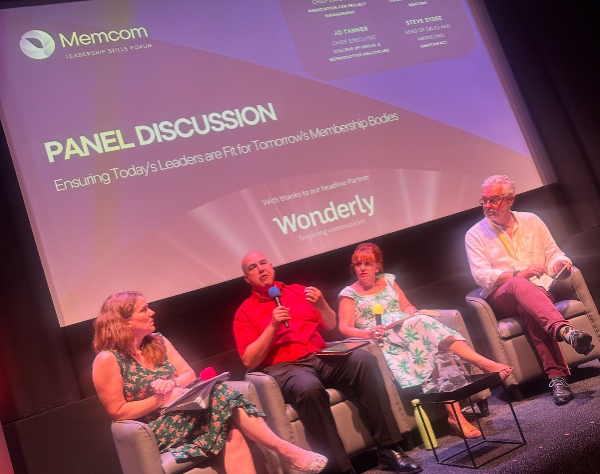
At the recent Memcom Leadership Skills Forum, Georgina Waite, CEO of the Association of Business Mentors, chaired a panel discussion exploring one of the biggest questions facing membership organisations today: how do we equip leaders for a world that is changing faster than ever?
The discussion brought together experienced CEOs and senior leaders from across the membership sector. Whilst every organisation faces its own unique challenges, there was remarkable consistency in both the issues being faced and the advice shared.
These recommendations weren’t theoretical. They came from leaders navigating these challenges every day and reflected a broad consensus that the leadership skills which have delivered success in the past won’t necessarily be the ones that shape the future. As membership organisations continue to adapt to changing member expectations, rapid technological advances and increasing commercial pressures, leadership itself must evolve.
These were the key recommendations that emerged from the session.
Create an experimental culture
The organisations making the greatest progress aren’t afraid to try new things. Leaders need to create environments where innovation is encouraged, mistakes become learning opportunities and people feel safe to challenge ideas. A blame culture stifles creativity; an experimental culture unlocks it.
Focus on the goal and take your team with you
People need clarity on where they’re heading and why it matters. Great leaders paint a compelling picture of the destination, then involve their teams in the journey. When people understand the vision, they’re far more likely to embrace the change needed to achieve it.
Build a culture of trust and vulnerability
Strong cultures aren’t built on hierarchy; they’re built on trust. Leaders who actively listen, ask curious questions and are prepared to show vulnerability create psychologically safe environments where difficult conversations happen early and people perform at their best.
This doesn’t mean lowering standards or avoiding accountability. Quite the opposite. High-performing teams are built on honest conversations, constructive challenge and mutual respect. Leaders who create an environment where people feel able to speak up are far more likely to identify risks early, encourage innovation and retain talented people.
Be comfortable making decisions with imperfect information
The pace of change means waiting for complete certainty is no longer an option. The most effective leaders gather the best information available, make informed decisions and adapt as new informationemerges. Agility is now a core leadership capability.
Hire for values as well as capability
Technical skills can be developed; values are much harder to change. Recruiting people who align with your organisation’s purpose and culture is critical, supported by clear role expectations and robust recruitment processes.
Hire slowly and, where values or behaviours are consistently misaligned, act decisively. Protecting the culture you’ve worked hard to build is one of a leader’s most important responsibilities.
Push through when leadership gets tough
Every leader faces setbacks, criticism and uncertainty from time to time. Resilience isn’t about avoiding difficult periods; it’s about maintaining focus, supporting your team and continuing to move the organisation forward when the pressure is at its greatest.
Embrace technology without losing the human touch
Technology and AI present enormous opportunities for membership organisations, but they should enhance relationships rather than replace them.
AI has the potential to improve productivity, personalise member experiences and free up teams to focus on higher-value work. However, technology should support relationships, not replace them. The organisations that succeed will combine digital capability with empathy, emotional intelligence and exceptional member engagement.
Don’t lead alone
One of the strongest themes from the discussion was the importance of having a trusted support network – a “tribe”. Leadership can be lonely, and the best CEOs deliberately surround themselves with mentors, coaches and peer groups who challenge their thinking, share experience and provide objective support when difficult decisions need to be made.
No leader has all the answers. Seeking support isn’t a sign of weakness; it’s one of the hallmarks of effective leadership.
Recruit with clarity
Successful recruitment starts long before the interview. Clear job descriptions, thoughtful questioning and a robust recruitment process significantly improve the chances of finding people who will thrive in both the role and the culture of the organisation.
Looking ahead
The discussion reinforced one clear message: leadership is no longer about having all the answers. It’s about creating the right culture, making confident decisions in uncertain times, surrounding yourself with trusted people and continuously learning as the world changes.
The challenges facing membership organisations will continue to evolve, but the qualities required of tomorrow’s successful leaders remain remarkably consistent. They create healthy cultures, embrace change, build strong teams, adopt technology wisely and recognise that leadership is not something that should be done in isolation.
At the Association of Business Mentors, we believe better-supported leaders build better organisations. Whether through executive mentoring, workplace mentoring programmes or facilitated peer learning, we help leaders develop the confidence, perspective and practical support they need to navigate today’s challenges and prepare for tomorrow’s opportunities.
Huge thanks to Jo Tanner, CEO of the College of Sexual and Reproductive Health, Professor Adam Boddison, CEO of the Association of Project Management and Steve Sydee, Sales & Marketing Director at SmartImpact for sharing their insights and experience on the panel.