

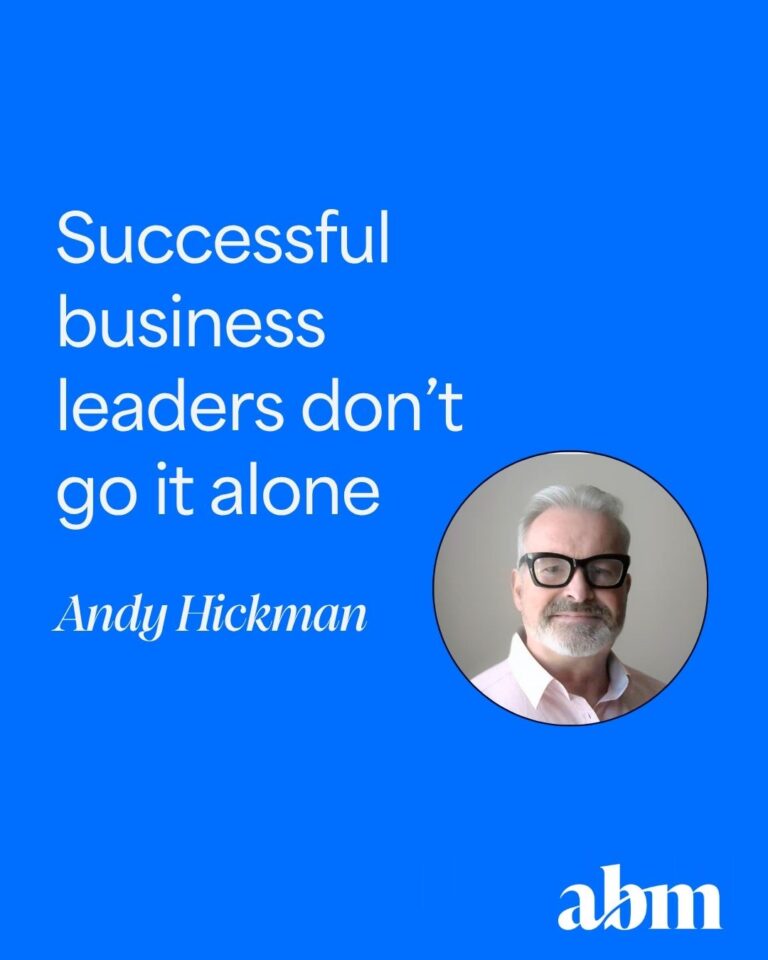
I recently had the privilege of speaking at a University Business School awards ceremony; a great event and a real pleasure to meet those who will undoubtedly be in the next wave of inspiring business leaders. Whilst the brief was quite relaxed, I was asked to include my views on which skills were most important in leading successful businesses today. What would you say?
As I think most of us would do, I briefly reflected upon my past business leadership experience. Initially, the early twenty years in the corporate world; time spent with a long list of both private and public sector organisations, many of whom had huge numbers of employees and massive turnovers. In fact the majority had significantly complex business models; companies such as IBM, AXA, Unilever, & BP, and government departments such as the DWP, MOD & DVLA. From this perspective, my thoughts regarding the critical leadership skills gravitated to a long list including: communication, strategic thinking, adaptability, emotional intelligence, etc., most of which I suspect would appear on most peoples’ lists.
But then I contrasted that with the more recent fifteen years of business life; the many hundreds of SMEs I had helped, ranging from solopreneurs to 200+ employee organisations. According to government statistics, over 99% of UK businesses sit in this sector. Even more interestingly over 90% of these SMEs are in fact solopreneurs or micro outfits (less than 10 employees). I therefore switched the question for my business school speech to; what skills are missing when I have witnessed such businesses fall short of their game plan?
Alas, fewer employees or lower turnovers doesn’t necessarily mean life as an SME business leader is any less complicated or challenging. In fact often the opposite as resources are fewer and therefore the overall leadership responsibility for any one individual can be much broader.
It can also involve a more directly relatable set or people management challenges, especially with smaller teams that are family sourced and / or community rooted. Some of these organisations are on their way to being bigger (or acquired by bigger), others are more suited to remaining small and perfectly formed with ongoing ‘fine-tuning’, and there are many who sit in the middle oscillating between these two ends. But what do these leaders exhibit in order to not just survive, but thrive?
So you’d think that the majority of ‘failures’ are caused by poor or unrealistic business plans, but in my experience it wasn’t so much the design but the execution. Where I had seen leaders trip up, they had assumed they could cover all the bases alone and did not recognise that they needed help. Or, if they did, they weren’t able to identify where in order to ask for the right type of support. I therefore changed my stock answer for the award speech to simply, ‘Self-Awareness’!
However, the reality is that none of us knows everything and often it is the case that you don’t know what you don’t know because of personal blind spots or completely new situations you find yourself in. Suffice to say that each of us can therefore become more effective as business leaders by being better at identifying when and where we may need support.
I liken it to travelling down a new road, or one that you haven’t used for a while, and being unaware there are hazards ahead; you don’t know where the potholes are. You may be lucky in that there are none (unlikely, especially in the UK!) or you may be able to travel with such skill that you can miss those that are there. But what about if you need to drive at speed and in the rain/fog/night?!
Unfortunately we don’t drive/lead businesses in optimum and calm conditions; unpredictable weather changes and varying road conditions are common. So how do we improve our self-awareness skills in these scenarios?
If you are the business owner / MD / CEO etc of an SME business, you may not have a leadership team with which to bounce ideas off of. Or, you may feel your role is seen to be all about providing the answers, and that asking others for their opinion is inappropriate. Even if you do have a trusted colleague with whom you can discuss delicate business issues, it’s unlikely you feel able to engage in the more personal exercise of identifying your leadership blind spots.
Connecting with leaders from other businesses and utilising them as sounding boards and informal mentors is a great alternative but it can be hard if you are sensing you need help but aren’t sure about what. It’s also quite a daunting activity unless you have a strong and close network of like minded business owners that you feel comfortable in sharing your uncertainties with. Even when you are part of a larger organisation with a mature in-house mentoring programme, it can be really difficult for that to be impartial and cover sensitive topics such as workplace conflict or career change.
This is why I believe professional business mentoring matters; to help us all identify where the potholes are on the roads we wish to travel and how to navigate around them. I used to think business leaders with an unblemished track record were the ultimate colleagues / new hires, but in hindsight it’s better to have access to those who know where the potholes are rather than those who haven’t experienced any.
Einstein once said that, “Failure is on the road to success”, and by having these leadership ‘scars and bruises’ available through a professional mentor can help avoid those expensive garage bills.
The ABM really gets this, and one of the reasons I joined the organisation and then pursued Fellow status a few years back was to be a part of a community of individuals, not just with high levels of training (ILM7 and above) and high accreditation standards, but with extensive operational leadership experience. By my estimation, across just the 40+ ABM Fellows in the UK, there are over 1000 years of those ‘scars & bruises’ covering most industries, functional business areas, and ‘road ahead hazards’.
As well as providing a great support network to its peers, that community is also hugely active in the UK mentoring profession i.e. it’s much more than a list of names. These are just a few reasons why I believe the ABM is well placed to support us all as business leaders in our individual road trips going forwards.
My key takeaway is therefore this… Becoming more self-aware is a critical leadership skill; sensing when one needs help and for what can make a difference between a game plan being achieved, or falling just short, or even worse; just falling!
Professional business mentors help identify both the need and the solution options. Those from within the ABM bring the tools, the expertise, and most importantly, the operational experience in travelling those hazardous roads. Feel free to message me via LinkedIn if you would like to compare and share your experiences on this topic.
By Andy Hickman, Non-Executive Board Director